


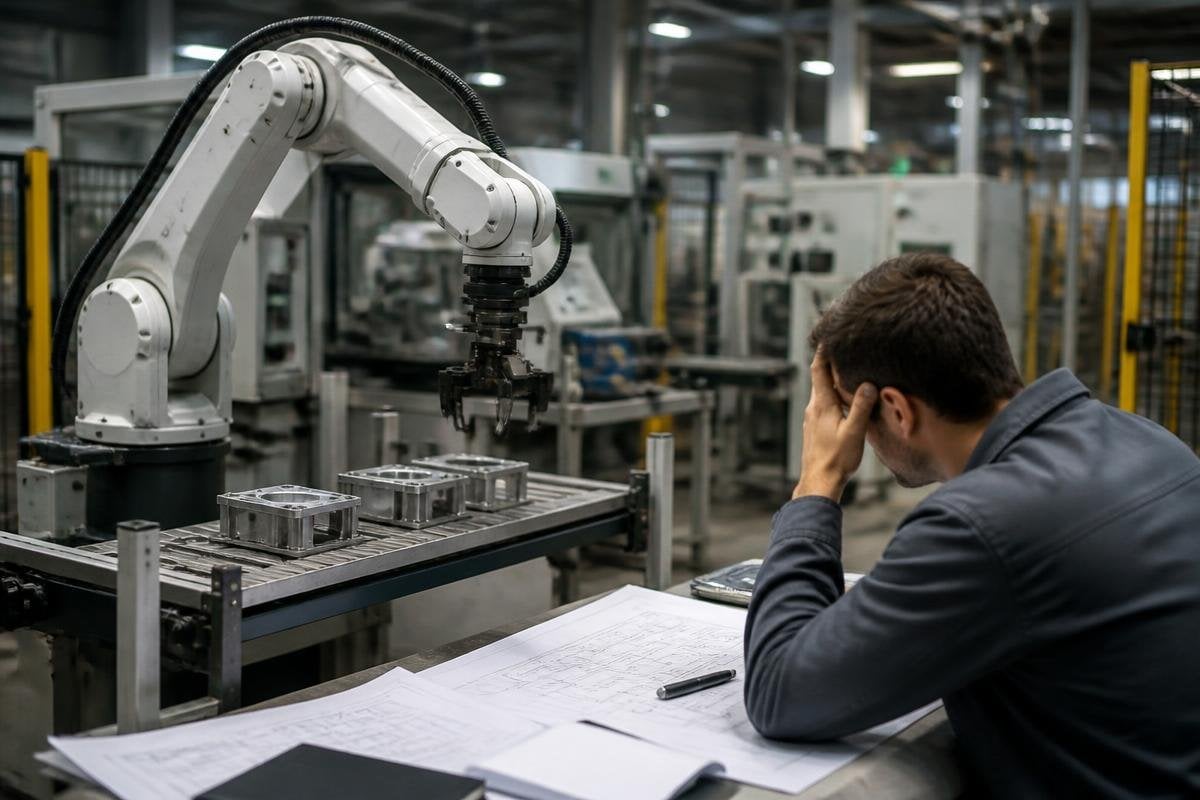
A robot can move a part all day and still fail the factory. The mistake usually starts before anyone chooses a model: the team picks a machine before defining the job, the handoff, and the result that will pay for it.
Quick read
- Start with one repeated task and a measured result
- Check the full work cell, not only the robot arm
- Keep a person available for faults and odd parts
Start with the job
A useful project begins with a task that repeats in a known way. Write down the part size, weight, arrival position, cycle time, shift length, and acceptable error rate. If those details are missing, a supplier can show a smooth demo without proving that the robot fits your line.
The task also needs a clear finish point. “Automate inspection” leaves too much open. “Check the seal, record the result, and send failed parts to a separate bin” gives the team something it can test.
That wording changes the machine choice. A camera, gripper, conveyor, safety scanner, or software link may matter more than the arm itself. The arm only handles the part between its reach limits.
Count the work around the robot
The cell includes every step that lets the robot do its job. Parts need to arrive in a known position. The gripper needs the right surface and enough grip. The control system needs a signal from the upstream machine and a safe response when that signal stops.
These details affect output. Fast motion still leaves the cell waiting if parts arrive crooked, a fixture needs manual adjustment, or a worker must clear a fault after every few cycles.
The same check applies to maintenance. Ask who will replace a worn gripper pad, inspect a cable, update the software, and restore the cell after an emergency stop. Those tasks belong in the plan before the purchase order.
A repair log can show more than the fault; it can show which data the robot needs to keep working. Reports from Robot24 on machines and factory automation give you recorded examples to compare with the data link your own cell will need.
Treat the data link as part of the machine
Many projects focus on motion and leave the software connection until late. That creates work when the robot must exchange status, part data, recipes, or fault messages with existing equipment.
Name each connection early. The plan should show which system sends the part-ready signal, where inspection results go, and what happens after a failed check. It should also state who can change a program and how the team records that change.
A clean data path helps with more than reports. It lets the operator see why the cell stopped, lets maintenance find repeat faults, and gives managers a way to compare planned output with actual output.
Keep people in the operating plan
Automation still needs people who understand the process. Operators handle unusual parts, clear jams, load materials, and report changes that a fixed program may miss.
Maintenance staff need access to manuals, spare parts, and safe recovery steps. Training should use the real cell. A classroom explanation cannot cover every sensor position, stop button, access door, and recovery sequence.
The handover should include normal running, planned stops, fault recovery, and safe isolation of energy. Safety belongs in the design review. Check the risk assessment, guarding, access points, emergency stops, and restart behavior with the people who will work beside the cell. A fast machine with a poor recovery process can create long stops and unsafe workarounds.
Check the case before buying
A sound proposal connects the machine to a result that the factory can measure. That result might be fewer manual lifts, a steadier cycle, fewer inspection errors, or more output from an existing line. Pick one main result first, then record the costs needed to reach it.
I’d reject a project that can’t name its first task, its failure response, and the person who will maintain it.
Use this check before you approve a pilot:
- Name the task: describe one repeated operation in physical terms
- Record the baseline: measure the current cycle, errors, staffing, and stops
- Test the handoff: show how parts, signals, and failed items move through the cell
- Plan recovery: write the steps for jams, sensor faults, and unusual parts
- Cost the whole cell: include tooling, safety equipment, software, training, and service
- Set the review date: compare actual output with the agreed result after the trial
A pilot should answer a narrow question with the factory’s own parts and staff. If the result depends on perfect part placement or a specialist who won’t run the line later, the design needs more work.
Manufacturers get better results when they buy a working process rather than a robot on its own. The next decision is concrete: which repeated task can your team measure from start to finish before it asks a machine to do it?