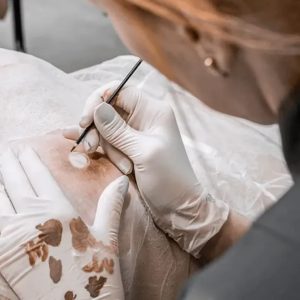



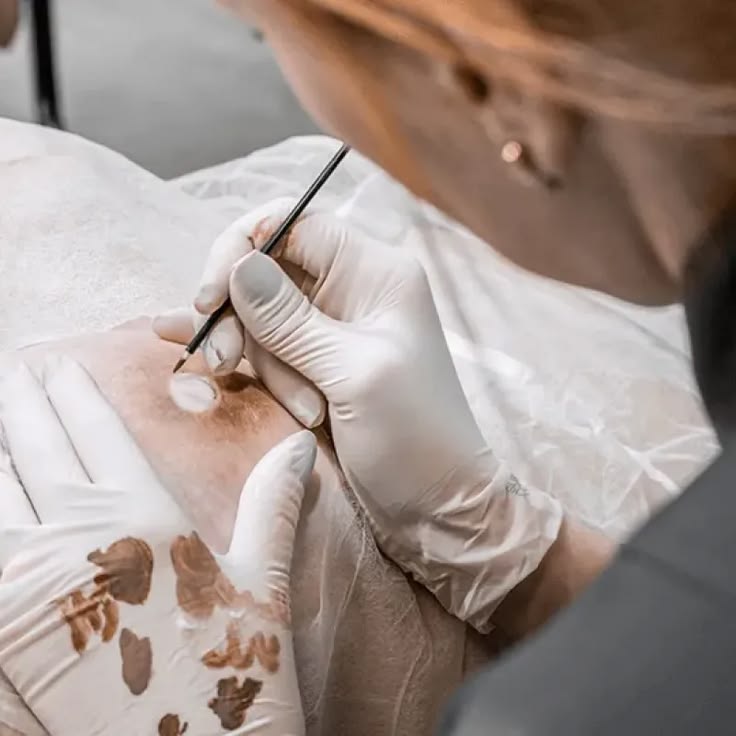
Three-dimensional tattooing encompasses several distinct artistic styles, each using a different optical strategy to manipulate how the human eye perceives depth on living skin. While traditional tattoos rely on uniform black outlines and flat color fills, 3d areola tattoo mesa styles remove hard borders in favor of directional lighting, cast shadows, and anatomical perspective to make designs appear suspended above the body, carved into the flesh, or emerging from beneath the epidermis.
1. Biomechanical and Cybernetic Realism
Inspired by surrealist science fiction and industrial design, biomechanical tattoos create the illusion that the wearer’s skin has been peeled, torn, or unzipped to expose intricate machinery or alien anatomy beneath the surface.
-
Unique Features: Artists render curled edges of torn skin with dense, sharp inner shadows along the rim of the opening. Inside the recessed cavity, metallic gears, hydraulic pistons, copper wiring, and carbon-fiber plates are layered against deep black background shading.
-
Anatomical Synergy: Biomechanical pieces are mapped directly onto major muscle groups and moving joints—such as the deltoid, bicep, forearm, or calf—so natural limb flexion makes the internal pistons appear to shift.
2. Trompe-l’œil Optical Illusions
Derived from the French phrase meaning “deceive the eye,” trompe-l’œil tattoos use architectural perspective and geometric distortion to alter the perceived structure of the body.
-
Unique Features: Warped checkerboards, honeycomb lattices, impossible staircases, and abyssal portals rely on strict vanishing points and progressively darkening black gradients. As the geometric cells shrink and darken toward a central focal point, a solid forearm, chest, or leg appears hollowed out into a deep tunnel.
-
Precision Geometry: Unlike organic 3D styles, trompe-l’œil demands razor-sharp line symmetry and careful calibration to a primary viewing angle so the perspective does not warp unintentionally.
3. Floating Drop-Shadow Realism
This style focuses on making small, lifelike objects appear physically resting on or hovering millimeters above the skin.
-
Unique Features: Butterflies, spiders, honeybees, water droplets, and realistic jewelry are rendered in crisp micro-detail without outlines, paired with a soft-edged, translucent greywash drop shadow offset slightly from the subject. The narrow strip of bare skin between the object and its shadow creates the perception of an empty air gap.
-
Light Refraction: Water droplets and gemstones use pure white specular highlights on the side facing the imaginary light source and soft crescent shadows on the opposite curve to simulate transparency and moisture.
4. Sculpted Stone Reliefs and Wood Carvings
Rather than popping outward, sculpted relief tattoos make the skin look as though a stone mason or woodcarver chiseled intricate artwork directly into the dermis.
-
Unique Features: Popular motifs—including ancient stonework, skulls, compasses, religious iconography, and Celtic knots—feature sharp bevelled edges, weathered surface cracks, and directional rim highlights. By casting consistent shadows along the inner walls of every carved groove, the tattoo achieves the tactile weight of engraved stone or timber.
5. Tactile Punctures, Ribbons, and Stitched Skin
Tattoos that interact directly with simulated skin openings create an immediate physical reaction by mimicking tension and texture on the epidermis.
-
Unique Features: Satin ribbons, leather corset laces, metal rings, and surgical sutures are drawn weaving in and out of realistic skin eyelets. Tiny, dark puncture shadows at each entry and exit point—combined with subtle tension creases shaded into the surrounding skin—make the lacing look physically threaded through the body.
6. Hyper-Realistic Florals and Emerging Wildlife
Organic 3D tattoos bring natural subjects to life through foreshortening, petal layering, and depth-of-field blurring.
-
Unique Features: In 3D floral work, upper petals cast soft shadows onto the layers tucked beneath them, while curled outer petal tips catch bright highlights. In wildlife pieces—such as coiled snakes, wolves, or roaring lions—artists render the forward-facing focal point in razor-sharp focus while softly blurring background elements, making the subject appear to step forward out of the skin.